
The Difference Between Granite, Marble and Luxury Marble | Don’t Confuse Them Anymore
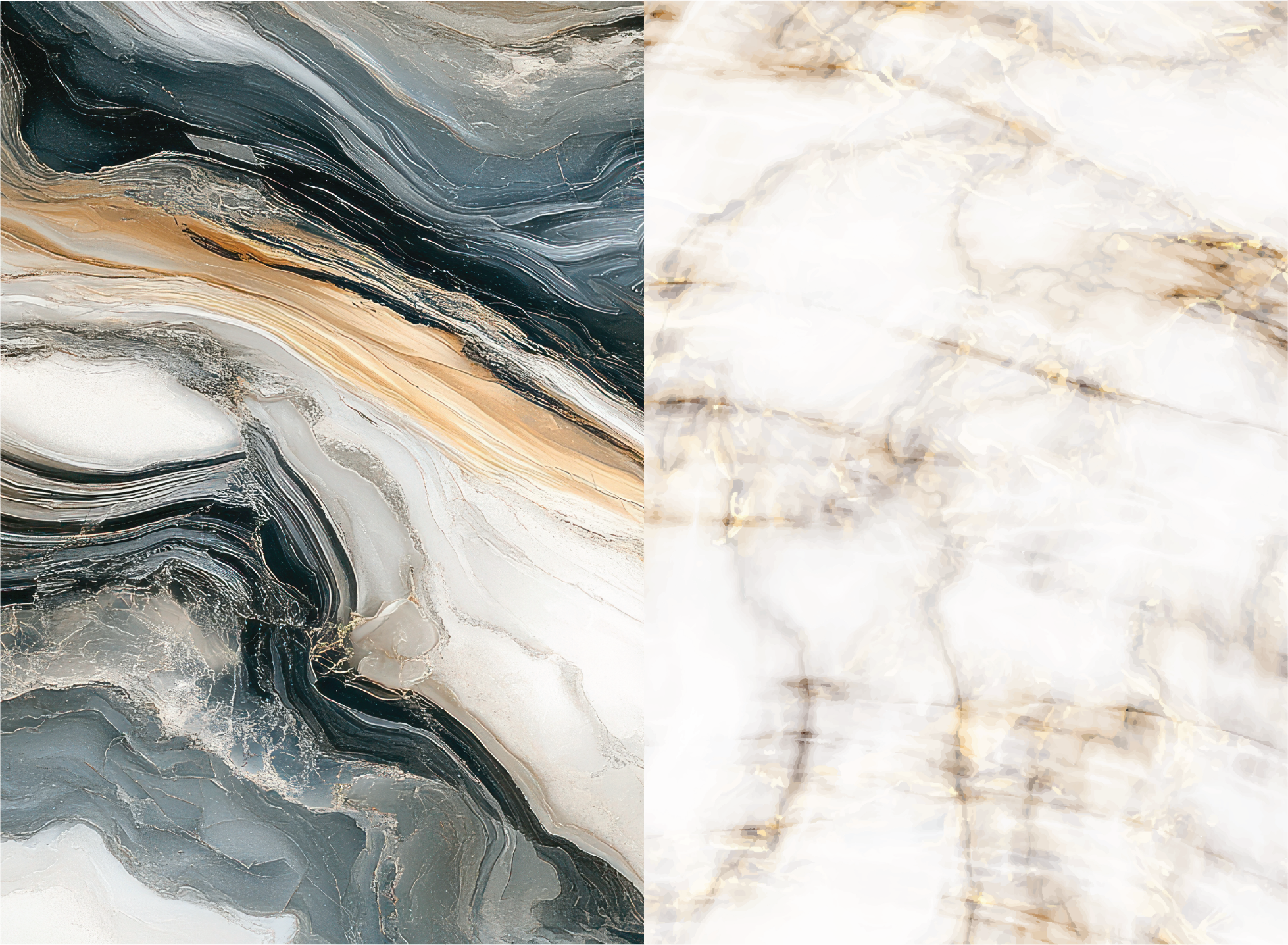
As living standards improve, more people are paying attention to home design and interior finishes. Marble and granite are among the most used high-end decorative stone materials. Generally, marble is used indoors, while granite is more often used outdoors. So, what are the real differences between them?
1. Different Origins and Composition
Granite is an igneous rock, formed from molten magma that cools and solidifies beneath the earth’s surface.
Marble is a metamorphic rock, created when existing stone is transformed under high pressure and temperature.
Luxury marble belongs to the marble category but is selected from rare quarries or premium sections of stone, known for exceptional veining, colour purity, and visual impact.
Granite has a dense, hard structure, while marble and luxury marble are moderately hard, with luxury marble often displaying more dramatic mineral movement and refined veining.
2. Hardness and Durability
Granite is harder and more durable, making it more difficult to process, but highly resistant to weathering and corrosion. Its colour and structure can remain stable for hundreds of years.
Marble contains calcium carbonate, which makes it more sensitive to moisture, air, and chemicals. Over time, its surface may lose its shine if not properly maintained.
Luxury marble shares similar physical properties to marble but is typically used in controlled environments or feature applications, where aesthetic impact is prioritised over heavy wear.
Without proper maintenance, marble and luxury marble may lose surface shine over time.
3. Applications and Usage
Marble is mainly used for interior applications due to its elegant appearance and decorative qualities.
Luxury marble is often used as a statement material in feature walls, bathroom vanities, fireplace surrounds, hotel lobbies, and high-end residential spaces.
Granite, because of its higher density and strength (and relatively higher natural radiation levels), is more commonly used in outdoor areas such as paving, facades, and public spaces.
The rich veining and depth of marbles, especially luxury marble make it highly sought after in interior design.

4. Appearance and Pattern
Marble features flowing, organic veining with a wide variety of colours and patterns.
Luxury marble is distinguished by bold veining, high contrast patterns, and refined colour palettes, often with book-matched or architectural visual effects.
Granite typically has a more uniform, speckled appearance, commonly in grey, white, or neutral tones, with less dramatic pattern variation.
5. Price Differences
Marble is generally more expensive due to its aesthetic value, smooth texture, and decorative appeal. Prices vary depending on origin and quality, ranging from hundreds to thousands per square metre.
Luxury marble commands a higher price point due to rarity, quarry origin, visual uniqueness, and selective processing, often used in premium or bespoke projects.
Granite has simpler patterns and is mainly used outdoors, making it more affordable, typically ranging from lower to mid-price points.
Although granite, marble, and luxury marble are all natural stone materials, they differ significantly in formation, structure, hardness, durability, application, appearance, and cost. Choosing the right stone depends on your project’s function, environment, and design goals, whether prioritising durability, elegance, or statement luxury.